Published by:

Prateek Ahuja
Like this article?
The Central Bank of the UAE (CBUAE) has raised its Base Rate by 25 basis points, taking it from 3.65% to 3.90%, effective 17 September 2026.
The move follows the US Federal Reserve’s decision to increase its target range for the federal funds rate by 25 basis points to 3.75%–4.00%.
For people in the UAE, an interest rate increase can affect everything from mortgages and personal loans to car finance, credit cards and savings.
If you’re planning to buy a home, understanding how mortgage rates affect the overall cost of your home loan becomes particularly important when rates are changing.
So, what does the latest UAE interest rate increase actually mean for you?
Here’s a simple breakdown.
Key takeaways
The UAE Base Rate has increased from 3.65% to 3.90%, effective 17 September 2026.
The increase follows the US Federal Reserve’s 25-basis-point rate hike.
Mortgages and other borrowing costs could increase, although the impact will vary by bank and loan type.
People with variable-rate mortgages may be more exposed to movements in benchmark rates such as EIBOR.
Personal loans, car loans and credit cards could also become more expensive in a higher-interest-rate environment.
Savers could benefit if banks offer higher rates on savings accounts and fixed deposits.
If you’re planning to buy a property with a mortgage, comparing available rates and getting pre-approved can help you understand your borrowing capacity before making an offer.
Why did the UAE Central Bank raise interest rates?
The UAE dirham is pegged to the US dollar, which means monetary policy in the UAE closely follows changes in US interest rates.
The CBUAE Base Rate is anchored to the US Federal Reserve’s Interest on Reserve Balances (IORB). The Federal Reserve raised the IORB rate by 25 basis points to 3.90%, effective 17 September 2026.
The UAE subsequently increased its Base Rate by the same amount.
What is the UAE Base Rate?
The Base Rate is the main monetary policy rate set by the Central Bank of the UAE.
It helps determine short-term borrowing conditions and provides a floor for overnight money market rates in the UAE.
However, this doesn’t mean every mortgage, personal loan, car loan or credit card rate will automatically increase by 0.25%.
Banks price their products based on several factors, including market rates, their own cost of funding, the type of loan and the borrower’s financial profile.
How will the UAE interest rate increase affect you?
Whether the rate increase affects you positively or negatively largely depends on whether you’re borrowing, saving or planning a major purchase.
Here are some of the main areas to watch.
1. Mortgages and home loans
If you have a mortgage or are planning to get one, interest rates are particularly important.
Many variable-rate mortgages in the UAE are linked to the Emirates Interbank Offered Rate (EIBOR) plus a margin charged by the bank.
As of 16 September 2026, the 1-month EIBOR stood at 3.99%, while the 3-month EIBOR was 4.13%.
If benchmark rates rise, borrowers with variable-rate mortgages could see their interest rate and monthly repayment increase when their mortgage is next repriced.
If you already have a fixed-rate mortgage, your agreed rate would generally remain unchanged during the fixed-rate period. Once that period ends, however, the rate available to you will depend on market conditions and your bank’s pricing at the time.
Even a seemingly small difference in your mortgage rate can make a difference over a long loan tenure. You can read more about why a 0.5% mortgage rate difference in the UAE matters.
What about new mortgages?
If you’re currently looking to buy a property, banks may adjust the mortgage rates they offer as market conditions change.
This means the same property and loan amount could potentially come with a different monthly repayment depending on the mortgage rate available to you.
That’s why it’s important to compare mortgage options and understand your borrowing capacity before committing to a property.
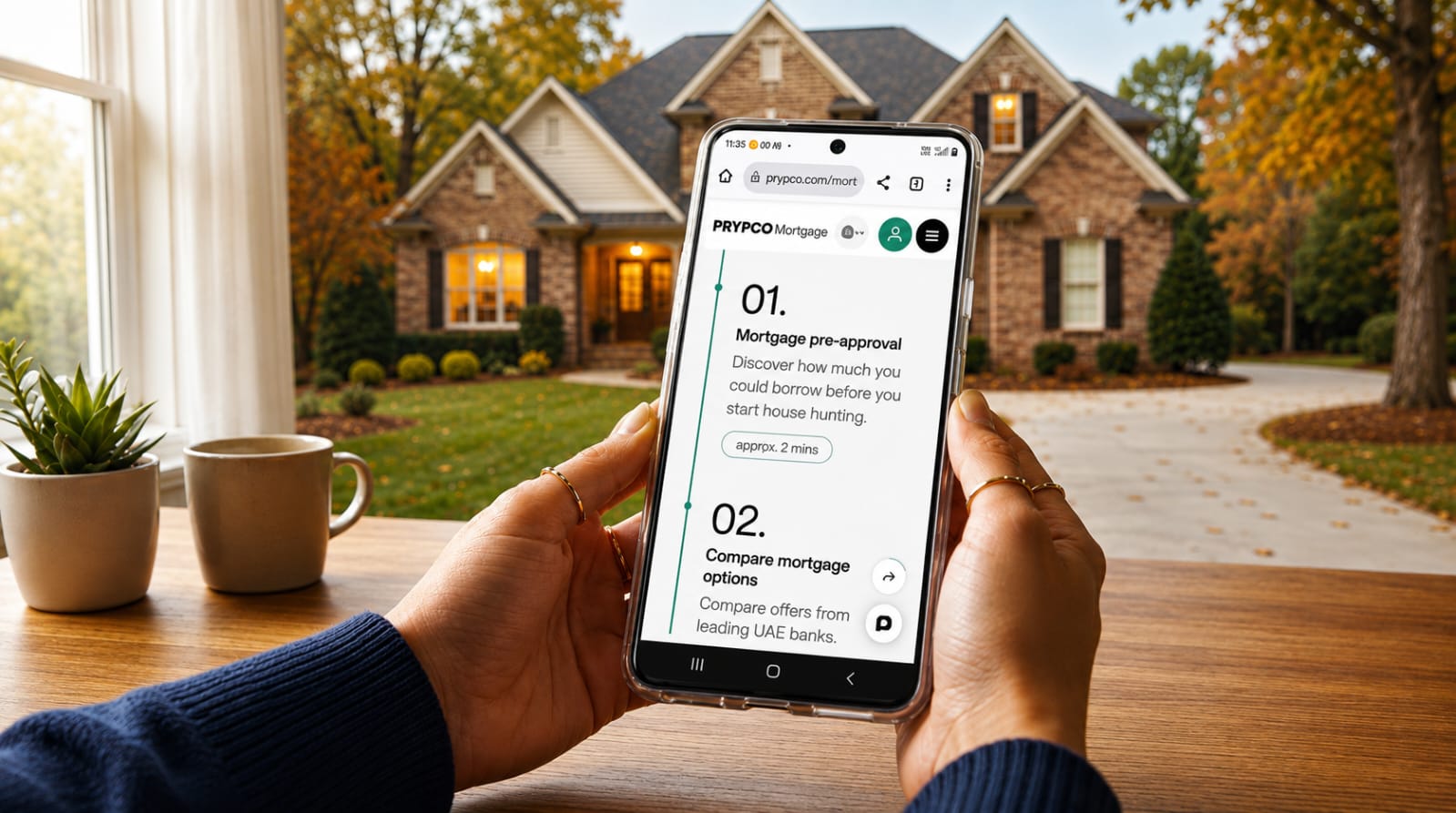
Getting a mortgage pre-approval before starting your property search can give you a clearer idea of how much you may be able to borrow and the mortgage options currently available to you.
2. Personal loans
Personal loans can also be affected by higher interest rates.
Banks determine personal loan rates using several factors, including their cost of funding, the customer’s salary, employer, credit profile and existing financial commitments.
A higher-rate environment could therefore result in higher borrowing costs on new personal loans.
For existing borrowers, the impact will depend on the terms of the loan and whether the interest rate is fixed or variable.
If you’re considering a personal loan, don’t look at the advertised rate alone. Compare the monthly repayment, total interest payable and total repayment amount before choosing an offer.
3. Car and auto loans
Planning to finance a new car?
Car loans and auto finance can also become more expensive when borrowing costs rise.
Banks and finance companies may adjust the rates they offer on new car loans based on changes in their funding costs and wider market conditions.
Even a relatively small difference in the interest rate can add up over a three, four or five-year loan.
Before taking out car finance, compare the interest rate, monthly instalment, loan tenure and total amount you’ll repay.
4. Credit cards
The impact on credit cards is slightly different.
Your credit card interest rate won’t necessarily change immediately just because the CBUAE has increased the Base Rate. The finance charges you pay are determined by your card issuer and the terms of your credit card.
However, a higher-interest-rate environment generally makes borrowing more expensive.
If you pay your credit card balance in full every month, you may see little direct impact.
But if you regularly carry an outstanding balance from one month to the next, it’s worth checking the finance charges applicable to your card and how much interest you’re paying.
5. Savings accounts and fixed deposits
Higher interest rates aren’t necessarily bad news for everyone.
Savers could benefit.
When market interest rates rise, banks may offer more attractive returns on certain savings accounts and fixed deposits to attract deposits.
That doesn’t mean your savings account rate will automatically increase by 0.25%. Rates vary between banks and products, and individual banks decide what rates they offer depositors.
If you have money sitting in a low-interest savings account, it may be worth comparing the rates available across savings accounts and fixed deposits.
6. Buying property in the UAE
Interest rates can also affect your decision to buy property, particularly if you’re relying on a mortgage.
A higher mortgage rate means you could pay more each month for the same loan amount.
For some buyers, that could mean:
Increasing their monthly mortgage budget
Choosing a smaller loan amount
Increasing their down payment
Looking at properties within a different price range
Comparing fixed and variable mortgage options
For first-time buyers in particular, it helps to understand your financing before beginning your property search. Our step-by-step guide for first-time home buyers in Dubai explains the process from mortgage pre-approval through to buying your home.
However, a rise in the UAE Base Rate does not automatically mean property prices will fall.
Property prices are influenced by several factors, including demand, supply, population growth, new property launches, rental yields, investor activity and the wider economy.
Interest rates are one part of that bigger picture.
Will UAE mortgage rates increase after the Base Rate hike?
They could, but there’s an important distinction.
A 25-basis-point increase in the CBUAE Base Rate does not mean every UAE mortgage rate will immediately increase by 0.25%.
Mortgage rates vary between banks and depend on factors including EIBOR, the mortgage product, loan-to-value ratio, borrower profile and whether the rate is fixed or variable.
Existing variable-rate borrowers may be more directly exposed to movements in benchmark rates, while borrowers within a fixed-rate period may not see an immediate change.
For anyone currently considering a mortgage, the important thing is to understand the rates available today and how a change in rates could affect monthly repayments.
Should you get a mortgage pre-approval now?
If you’re planning to purchase a property with a mortgage, getting pre-approved can help you understand your position before you start making offers.
A mortgage pre-approval can give you an indication of:
How much you may be able to borrow
Your expected monthly repayments
The mortgage rates currently available
Your maximum property budget
The documents you’ll need to proceed
And importantly, a mortgage pre-approval is conditional. It does not mean you have to proceed with the mortgage or purchase a property.
You can read our complete guide to mortgage pre-approval in Dubai to understand how the process works, what banks assess and what happens after you’re pre-approved.
With interest rates changing, knowing your options early can help you make a more informed property decision.
Looking to buy a property in the UAE?
Get your mortgage pre-approval with PRYPCO and compare mortgage options from 19+ leading UAE banks.
CTA: Get mortgage pre-approval
FAQs
What is the UAE Base Rate now?
The Central Bank of the UAE has increased its Base Rate by 25 basis points, taking it from 3.65% to 3.90%, effective 17 September 2026.
Why did the UAE Central Bank increase interest rates?
The CBUAE Base Rate is anchored to the US Federal Reserve’s Interest on Reserve Balances. The Federal Reserve increased the IORB rate by 25 basis points to 3.90%, effective 17 September 2026.
What is the US Federal Reserve interest rate now?
The Federal Reserve raised its target range for the federal funds rate by 25 basis points to 3.75%–4.00% on 16 September 2026.
What is EIBOR now?
As of 16 September 2026, the 1-month EIBOR was 3.99246% and the 3-month EIBOR was 4.12877%. EIBOR rates can change daily.
Will mortgage rates increase in the UAE?
Mortgage rates could be affected by higher benchmark rates, but they don’t automatically increase by the same amount as the CBUAE Base Rate. The actual impact depends on the bank, mortgage product, EIBOR and whether the mortgage has a fixed or variable rate.
Will my existing mortgage payment increase?
It depends on your mortgage. If you have a variable-rate mortgage linked to a benchmark such as EIBOR, your rate and repayments may change when the mortgage is next repriced.
If you’re within a fixed-rate period, your agreed rate would generally remain unchanged until that period ends.
Will personal loan rates increase in the UAE?
Rates offered on new personal loans could become more expensive in a higher-interest-rate environment. The actual rate offered will depend on the bank, your financial profile and the terms of the loan.
Will car loan rates increase in the UAE?
Car finance can also be affected by higher borrowing costs. However, the actual interest rate offered will depend on the bank or finance provider and the specific product.
Will credit card interest rates increase in the UAE?
Not necessarily. Credit card finance charges are determined by individual card issuers and the terms of each product, so a CBUAE Base Rate increase does not automatically result in the same increase to your credit card rate.
Are higher interest rates good for savings?
They can be. Banks may offer higher rates on certain savings accounts and fixed deposits when market interest rates rise. The actual return will depend on the bank and product.
Does a UAE interest rate increase mean property prices will fall?
Not necessarily. Higher borrowing costs can affect mortgage affordability and buyer demand, but property prices are influenced by many other factors, including supply, demand, population growth, rental yields, investor activity and overall economic conditions.
Should I get mortgage pre-approval before buying a property in the UAE?
Getting pre-approved before searching for a property can help you understand how much you may be able to borrow, your approximate property budget and the mortgage options available to you.
It can also help you search within a more realistic budget before you make an offer on a property.